COFFEE
 TEA
TEA CAPPUCCINO AND HOT CHOCOLATE
 SWEETS
 SYRUPS
 TABLEWARE
 RELATED PRODUCTS
 GIFTS AND SOUVENIRS
Tea drinking is part of the Chinese lifestyle. And the part is very significant from the point of view of social contacts. It's not just that the benefits of tea have long been known in China, and it is viewed as a daily restorative and tonic. Equally important, the tea ritual maintains friendships and family relationships. Sharing tea symbolizes the best aspects of human relations.
Since the country is very large, it is not surprising that each region has its own sophisticated symbolism. There are common traditions (rooted far in the past), and simplified ways to drink tea in a company. Tea is drunk at home and in restaurants, on the street and in small establishments. The Chinese love white, floral, green, but black tea is also found on the domestic market.
Tea is the best offering, a pure object, a sign of a person's unity with the world. The tea ceremony is best associated with the words: art, craftsmanship, sacrament, contemplation. In Chinese tea drinking, all the details of the ritual matter. This is not just a drink "swallowing": it is an event that should be beautiful and peaceful. Meditation focuses on boiling pure water, its connection with the leaf, the sense of smell and color. This is a special process of connecting with the world. Not only taste, but also every action carries a unique and at the same time associated with tradition meaning. The atmosphere that appears during the ceremony is akin to a cult performance. Everything is organically connected: the type of tea, the aesthetics of objects, topics for conversation, spiritual harmony.
The tea ceremony plays a significant role in maintaining family ties and creating new families: this is how the acquaintance with the relatives of the bride or groom passes, and respect for parents and elders is shown. At the wedding, the newlyweds drink the tea served by them as a symbol of their common destiny. To present tea is also to express remorse, regret, ask for forgiveness. Accepting a gift means reconciliation and recognition. In these cases, even unnecessary words are not required. Tea is given to teachers - when a new student is accepted.
Teapots and teapots

The ancient culture of tea drinking in China (which began long before our era) found its expression in special dishes. If everyone is now familiar with the teapot, then not everyone will realize that dry leaves for brewing are stored in the teapot. And the word "gaiwan" will baffle many. Gaiwan is a cup with lid and saucer. Such a practical thing also contains an important symbol: the unification of man with earth and sky. By the way, gaiwan appeared before the teapot.
Tea board - "chaban". An obligatory thing for the ceremony. All the items for the ritual are on it. A special tray with slots and a cavity for draining water is made from natural wood or bamboo. As a rule, these are rectangular or square coasters. But art knows no boundaries: in shape and materials, such tables are very different: oval and round, ceramic and stone, decorated with exquisite carvings. Some of them are used indoors, others outdoors.
Perhaps someone has already come across tea "toys" to decorate the tea board. They create a special atmosphere of tea action: reflection, conversation, mood for relaxation. The symbolism is very diverse: from Buddha to a decorative teapot.
Do not forget about the most interesting items for the correct brewing of tea: there are tongs, a needle, a scoop, a stick and a funnel in a special stand. A tea brush is also used. Without them, noble, aesthetically perfect preparation of a drink is impossible. And how not to mention "chahe": a graceful object that allows you to inhale the smell of dry tea leaves before brewing it.
Cups and bowls familiar to tea lovers are called "chabei". And here is a vessel unusual for Europeans - "chahai". A proper ceremony requires pouring tea not immediately from the teapot, but only after pouring it into a vessel that “equalizes” the composition.
When there is no tea-board, other utensils are also used: a container for draining water "shuiyu", a stand for a teapot "chuheng". There are very interesting items: for example, a pair of glasses of different heights, but the same volume. Low and wide for taste, high for aroma. The ceremony with such cups has its own technique: the drink in tall glasses is covered with wide glasses, turned over and served to the guests.
How tea is brewed
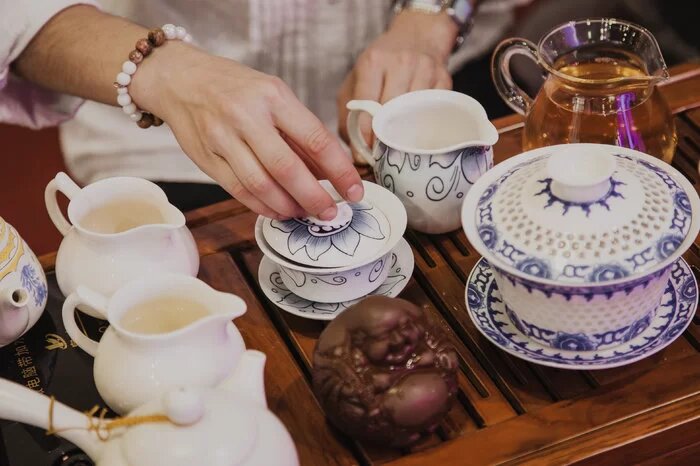
During tea drinking, high-quality real Chinese tea is brewed many times. No, not out of economy. The tea will have a special taste and aroma after each spill. By the way, they take a lot of leaves on a teapot. It all depends on the variety, but on average, five grams per 100 ml.
If in many countries it is customary to brew tea with boiling water, then different types of Chinese tea are poured with water not boiling, but with a lower temperature. It is worth familiarizing yourself with the recipe that shows the true taste of the drink if you decide to buy high quality tea, but previously unfamiliar. For some leaves, the temperature during brewing should not exceed 95, 90 and even 70 degrees. Green and white teas require careful handling, highSame temperatures are preferred for black, red or pu-erh. Burners or thermoses help maintain the desired water temperature. Water quality is the most important indicator for a tasty drink.
Before cooking, the kettle is poured over with boiling water. Then the first "spill" is technical, it washes, disinfects, steams the tea leaf a little. Yes, they don't drink this first brew at all. The most interesting thing is that the brewed tea is not infused for too long: it is poured for 10 seconds, increasing the interval of the next brewing to a minute. Pour immediately into a serving vessel. Tea is poured into cups completely. The next brewing is not the addition of water to the infusion, but the next filling of the teapot with the already steamed leaves in it.
Overexposing the brewed tea is just as bad as preventing the leaf from releasing the substances it contains. The main idea is that the most useful components are extracted, and the infusion does not become bitter and tart. After a minute, tannins and alkaloids enter the solution. Obviously, this method is completely different from the European infusion of black tea leaves in a teapot.
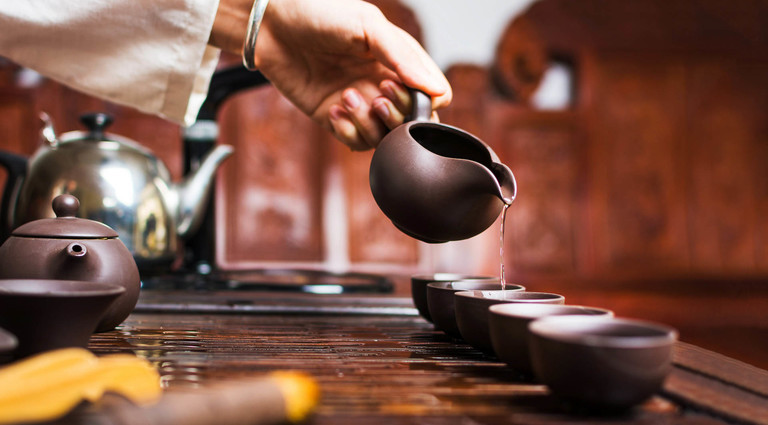
Drinking up to 10 cups of tea (according to the number of spills) - this looks unusual for Europeans, but quite common for the Chinese. Making tea according to Chinese traditions is a real creativity based on knowledge and inspiration. Love for tea and experience are decisive factors. The path to excellence begins with understanding: the real joy of the drink will appear when you pay attention to the unique properties of these wonderful leaves. And yet, Chinese wisdom is available to everyone, since anyone is able to distinguish good tea from bad. You just need to develop these abilities. And it will become clear: which leaf is better, which teapot is ideal - made of Yixing clay, glass, ceramics, porcelain ...
Chinese tea ceremony is not for a quick bite in the office. This is a beautiful ritual that allows you to enjoy your favorite tea or tasting a new variety. Tea allows you to achieve the desired level of relaxation and at the same time unites people gathered for tea. And in the coffeeynya.ua you can choose and buy tea for any occasion: there are excellent varieties for a relaxing stay and for a vigorous early morning.








-400x300.jpg "Coffee Industry: Cuba")