COFFEE
 TEA
TEA CAPPUCCINO AND HOT CHOCOLATE
 SWEETS
 SYRUPS
 TABLEWARE
 RELATED PRODUCTS
 GIFTS AND SOUVENIRS
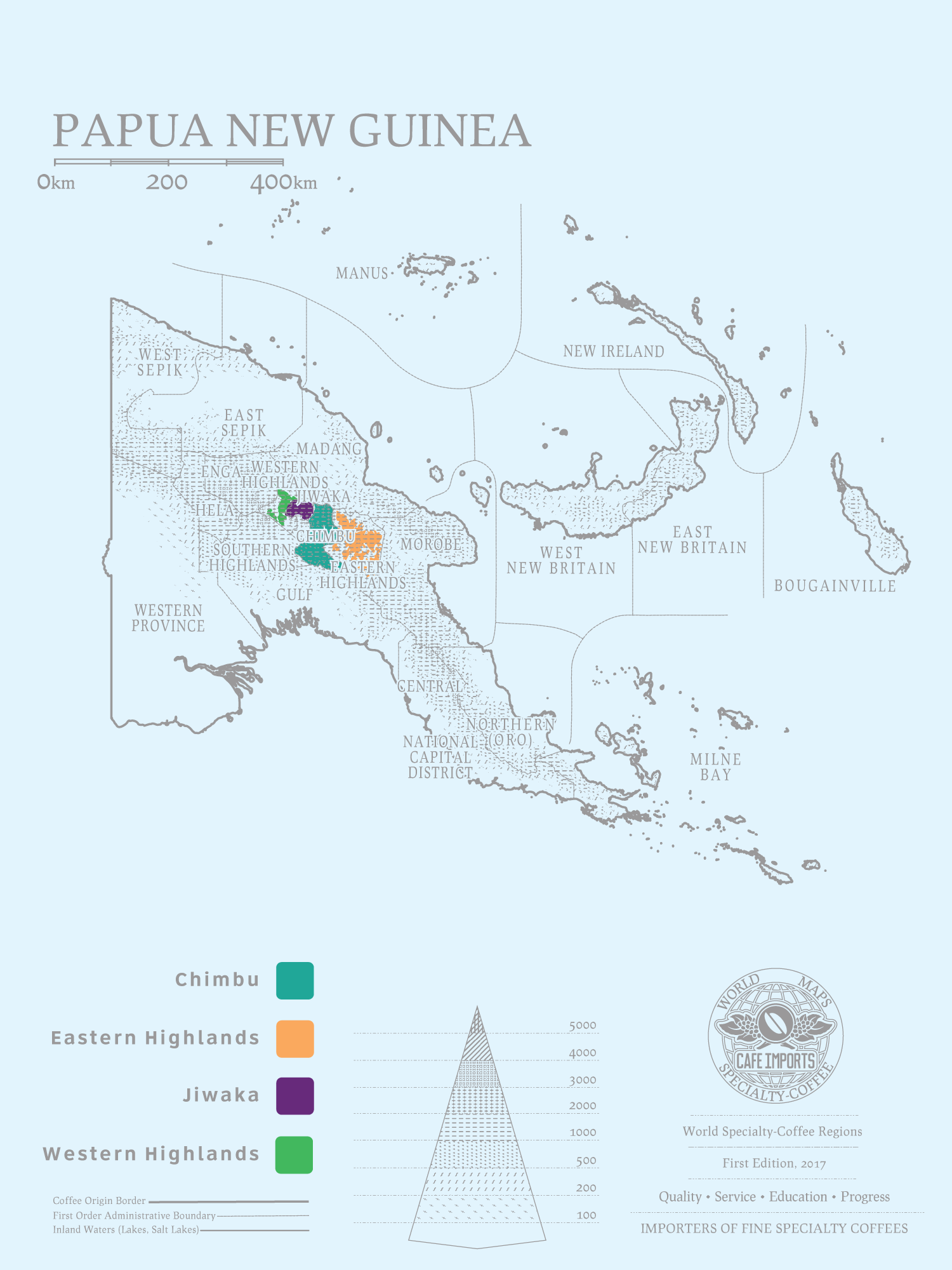
The plantations of Papua New Guinea have gone through different periods: the development of the coffee industry in this country has not always been successful and systematic. However, the state is one of the twenty leaders in coffee producers, with approximately 1% of the total world export of this product. Coffee beans from the country are imported not only by its neighbor - Australia. Germany buys even more, in the first place - supplies to the United States. Coffee trees have become the main source of income for the island nation's three million inhabitants. Small farms - about two hectares each - harvest 90% of the total harvest. According to statistics, in the best years they collectively received more than 75 thousand tons. In 2020, the country exported 50 thousand tons. Coffee is grown on an area of about 90,000 hectares, mainly in the Eastern Highlands and Western Highlands.
Colonization legacy
The ups and downs of the coffee industry in Papua New Guinea have been driven by domestic socio-economic conditions as well as world coffee bean prices. Like most countries of the "coffee belt", the history of local plantations is associated with the colonization of the country.
The first coffee trees appeared thanks to the colonists at the end of the 19th century. It is interesting that already at the beginning of the 20th century, coffee was exported: it was bought by the Australians. The commercial possibilities of this agriculture were appreciated twenty years later: initially, they grew mainly Robusta, in some places - Arabica. The Arabica plantation (Blue Mountain Coffee) was founded by the colonial government and then passed into private hands. The German entrepreneur managed to establish the entire cycle of obtaining high-quality arabica: from plantation maintenance to roasting and grinding. The goods were bought in the country and abroad. This plantation became the base for the further development of the coffee industry in the country. A significant stage in the growth of production fell on the 50-60s of the 20th century. The total area for coffee planting during this time has increased 30 times.
To a certain extent, the colonial government and entrepreneurs managed to instill in the local population the skills of plant support, preliminary soil preparation, and the collection and processing of coffee berries. In 1975, the coffee industry benefited greatly. The fact is that the crisis in the Brazilian coffee industry affected the growth of global prices. In the same year, Papua New Guinea gained independence. In this regard, difficulties arose: the Europeans, who supported the programs of the former colonial government for the development of industry, could no longer carry out their tasks. For several years, the production of premium coffee has decreased by three times.
The fight for coffee quality
The most important issue in the coffee industry is product quality. A big advantage of Papua New Guinea is that Arabica is grown here, only 5% is Robusta. Another important indicator is the climatic conditions of the country close to the equator. They are favorable in high-mountainous regions: humidity is ideal for Arabica and a stable temperature regime (about 28 degrees). The height of the plantations is 1500 meters and more. It is because of these wonderful conditions that coffee has become the country's main export crop.
However, since the 80s of the 20th century, the indicators previously achieved by the country have gone down, and the industry as a whole has become less efficient and profitable. Production and quality declined. Smallholder farmers are constantly faced with challenging problems: it is not easy to establish effective partnerships with traders and processors. In addition, according to the researchers, local tribes do not have enough agronomic training to care for plants. Diseases, pests and aging of coffee trees are a serious test for an unprepared person from an archaic tribe.
The third, but no less significant obstacle is the low prices for products from the Papuan allotments. A low price for a good product does not stimulate people to fight for the quality of coffee. Labor on the plantations is not highly valued, although the local coffee has the virtues of an organic product (grown without chemical fertilizers). A new breakthrough in the late 90s gave way to stagnation. It is not easy to buy coffee grown on numerous plantations of Papua New Guinea as a single variety. The grains are sorted according to size and imperfections. Coffee is more often sold in blends: beans produced in different parts of the highlands are mixed during sorting.
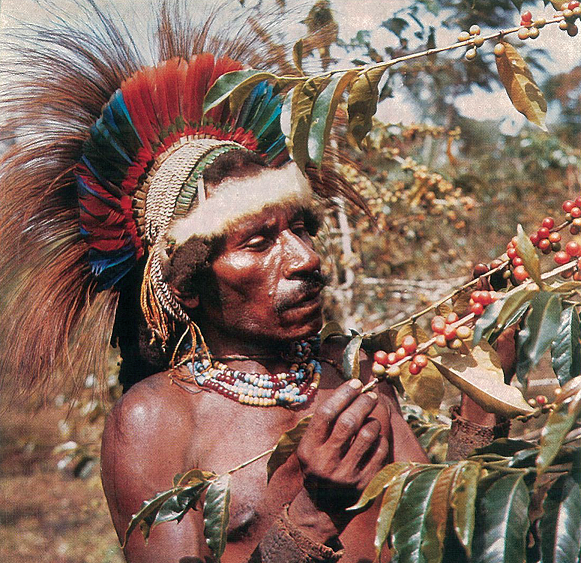
The question of "fair price" and partnerships is usually asked not by local workers - Papuans, but by economists and sociologists.
What increase in quality can be said if the tribes living here do not have access to training, technology, and even useful information? And how to export the grown coffee in large volumes from the highlands, if there are no roads, bridges and other infrastructure? These are the top priorities facing the Coffee Research Institute and organizations working for the benefit of Papua New Guinea. To a large extent, the development of the industry requires more than just nurseries and economic ties. Need a socialsupport of the population: education, medicine, security, cooperation. Many coffee producers in the country do not need loans and allotments, but basic means of survival - subsidies during periods of unstable prices for their product.
It is very difficult for isolated small farmers to achieve certified product status. The struggle for quality is ongoing, and there are already some successes. These include the establishment of wet processing facilities for coffee beans, testing laboratories and commissions for tasting and certification.
Try it yourself
Those who decide to travel to distant Papua New Guinea say that coffee in this country is delicious. The planters brought the best varieties into the country, distributed them, and they still yield a good harvest with proper care. Among the botanical names of the Arabica cultivated here: Typica, Bourbon, Arusha. Properly processed grains of these types give a drink with a sweetish taste, exquisite aroma. As the best brands are mentioned PNG, Sigri, Morobe.
How to learn to independently determine quality coffee or not? Only by trying, testing, tasting the product collected in the most diverse regions. It is interesting to compare the taste of coffee from regions of one country: you can understand how the varieties obtained in unique climatic conditions differ. Coffeeynya.ua offers to buy coffee grown in remote corners of the planet and feel the taste of real Arabica.











-400x300.jpg "Coffee Industry: Cuba")