COFFEE
 TEA
TEA CAPPUCCINO AND HOT CHOCOLATE
 SWEETS
 SYRUPS
 TABLEWARE
 RELATED PRODUCTS
 GIFTS AND SOUVENIRS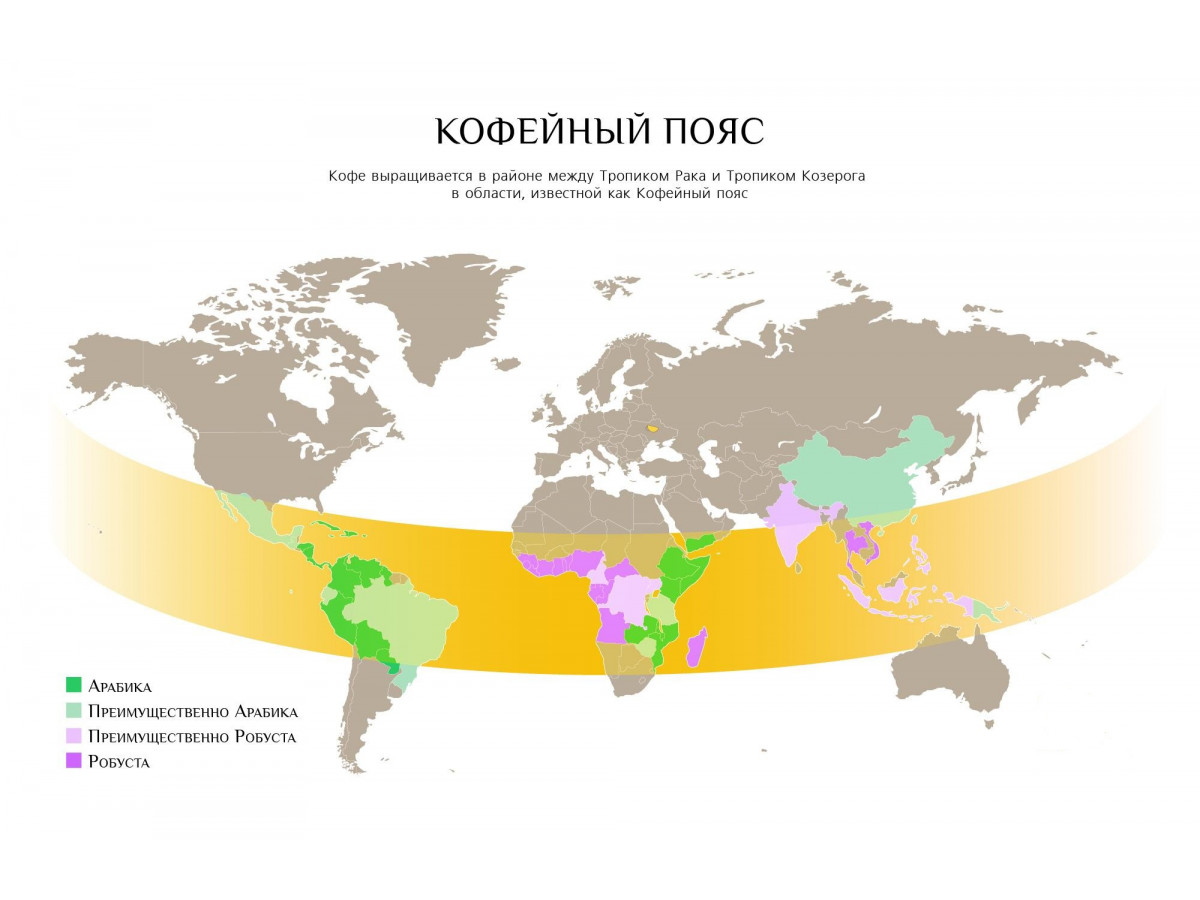
Coffee does not differ by brand, but by location and type of beans. Colombian and Brazilian coffee, Guatemala, Costa Rica and Peru. We will find out where Arabica and Robusta grow, we will understand the peculiarities of each variety.
A few words about Arabica and Robusta
Surely, when reading the information on coffee packages, you have repeatedly noticed the inscription "100% Arabica" and wondered what else can be used as raw materials. Connoisseurs of a strong drink will easily answer this question - nowadays, mixtures of Arabica and Robusta are often on sale. What are the differences between these species, which is valued more and should cost more?
Differences
Generally speaking, Arabica and Robusta differ in terms of growing conditions, agrotechnical requirements, chemical composition of grains, and, consequently, richness of aroma and bouquet of taste.
The homeland of Arabica is the highlands of Ethiopia; robustas - African countries. Today, the cultivation of robusta almost completely repeats the location of Arabica - America (south and center), Africa, Southeast Asia. However, in order to avoid crossbreeding, the cultivation of robusta is prohibited in some countries (Colombia, Costa Rica).
Arabica beans contain more essential oils responsible for rich multi-layered taste and persistent aroma, sugar and caffeine, but less chlorogenic acid. This ensures the softness of the drink. It is Arabica that can give sourness. Robusta is distinguished by its richness, bitter and astringent taste, weak aroma, watery and unstable foam. You can buy coffee beans Arabica or Robusta to your taste.
Popular coffee countries
Brazil
Holds a leading position in the cultivation and production of coffee for over 150 years. Some even have a stereotype that the coffee comes from Brazil. However, it is not. Coffee trees grow on red clay soils, on low-mountain plantations, withstand an unstable climate.
It is considered a true classic coffee, combining a strong, balanced taste with the absence of sour taste. People who are not used to experimenting with taste should buy coffee of this origin. Bouquet: walnuts and hazelnuts, peanuts, cocoa, medicinal notes, spices.
Colombia
Due to its large production volumes, the country ranks second after Brazilian coffee. And this is provided that Colombia is engaged in the cultivation of exclusively Arabica. Plants grow in private farms in the highlands. Colombian Arabica is distinguished by harmony and balance in taste and aroma.
You can buy coffee beans straight from the country in our online store.
Bouquet: sweet, juicy, syrupy.
Taste qualities: bright apple with sourness, Thai pineapple, lemongrass, pear and maple notes.
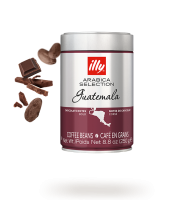
Guatemala
This coffee is one of the favorite types of real gourmets from all over the world. The secret of its popularity lies in the captivating scent with subtle notes of smoke. The drink reveals floral notes of orange blossom, passionfruit and ripe wild berries.
Bouquet: pronounced, slightly spicy, there are notes of cocoa beans, cereals, sweet vanilla and caramel, pleasant sourness of a green apple.
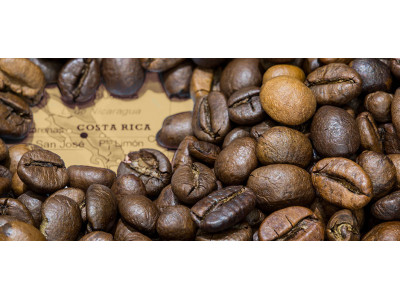
Costa Rica
Compliance with all agronomic techniques and natural conditions make this particular coffee ideal for any person. Plants are grown in the highlands, near volcanoes, where the trees are saturated with thin air.
The grains are of excellent quality, soft and delicate taste, rich aroma. Due to its low caffeine content, the drink will not hit your head or leave an unpleasant aftertaste. You can buy Costa Rican coffee beans if you appreciate the velvety and mild flavors.
Bouquet: berry, bakery, candied fruit with a slight grape sourness and pleasant bitterness of natural chocolate.
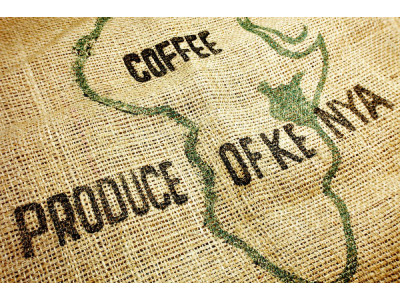
Kenya
The country follows strict rules for growing the coffee tree and rightfully deserves the title of one of the highest quality coffee in the world. The farms set up on the high slopes of the mountains yield a rich harvest every year.
The drink has the most complex, but balanced taste, which can be appreciated by both experts and coffee lovers. The bouquet will depend on the way the beans are processed.
With washed processing, the grains are saturated with the freshness of the mountains, a mixture of herbs. The aftertaste is filled with the freshest pastries or cognac-cigar notes that do not leave for a long time.
Dry processing saturates with sweetness, tropics and spice. The bouquet contains chocolate with peppercorn and pineapple-melon aromas. The taste is rich and rich: connoisseurs have tasted citrus notes, notes of red apples, ripe gooseberries, persimmons, tangerines. Aftertaste - vanilla notes with an admixture of baked apples.
Sumatra
From the grains of Sumatra, it turns out to brew complex coffee, rich in deep shades. The drink contains an invigorating citrus acidity, and complements it with woody shades, bitterness, spices. It is worth trying and buying coffee for people who are ready for experiments and ambiguous withmixed notes.
Conclusion
Of course, coffees do not have to fully meet these criteria. The amount of stored elements in beans always varies depending on many factors: the particular variety, the degree of roasting, the water temperature, your mood and well-being, etc.










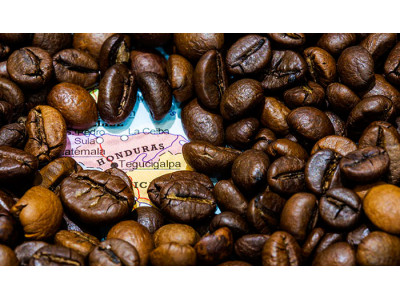








-400x300.jpg "Coffee Industry: Cuba")