COFFEE
 TEA
TEA CAPPUCCINO AND HOT CHOCOLATE
 SWEETS
 SYRUPS
 TABLEWARE
 RELATED PRODUCTS
 GIFTS AND SOUVENIRS
Unstable numbers
Côte d'Ivoire, like many other African countries, supplies the world market with green coffee beans (without roasting). For more than a hundred years, raw coffee has been exported to Europe - this is an important source of income for the state. Ivorian Robusta (plus some Arabica and Liberica) comes to the world market.
Although the country produces an instant coffee drink, only a small proportion of the beans are processed for consumption by the local population. Unlike Latin American countries, where there is a national cult of coffee, this drink is not popular in Côte d'Ivoire.
The Ivory Coast coffee industry (the former name of the country) cannot be called stable. In different periods, they can differ ten times. Let's compare some data:
- 1981 - 370 thousand tons
- 1984 - 85 thousand tons
- 2000 - 380 thousand tons
- 2011 - 32 thousand tons
- 2017 - 33 thousand tons
According to experts, 2019 brought about 80 thousand tons to the country (alternative information is about a harvest of 100 tons).
Difficult story
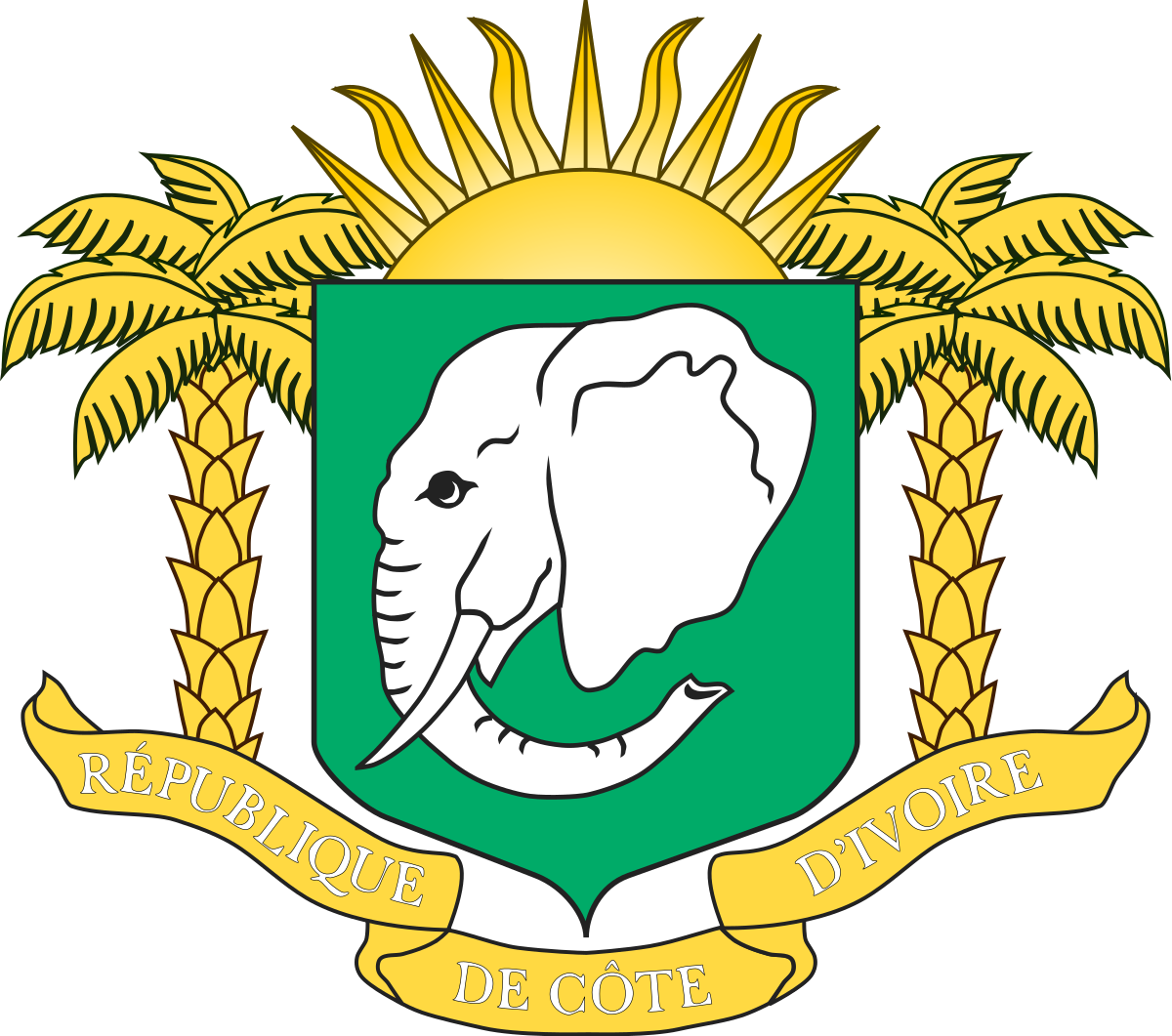
The coffee industry in this country has a rich past. Once the first plantings appeared thanks to the French colonialists at the end of the 19th century. Experiments with arabica were unsuccessful, but robusta gave an excellent harvest, which went to France. The coffee producing regions are mainly in the northeast of the country. Plantations grew due to the deforestation of the tropical forest: until the middle of the 20th century, the harvest increased annually. The subequatorial and equatorial climates are well suited for breeding robusta growing in the shade of cocoa trees. By the way, according to the latest culture, Côte d'Ivoire has a leading position in the world.
Yet the largest producer in Africa and the leading exporter of robusta in the world has significantly lost ground over the past half century. However, in the ratings of countries selling Robusta, the country still occupies not the last place (with a good harvest - the fifth). Although, as experts note, there is clearly not enough investment and competent planning in an industry that is so important for the country. The 550 million dollars that the country receives for exports is not a small amount, but not sufficient for successful development. One of the most important tasks is planting rejuvenation. The State Council for Coffee and Cocoa is trying to coordinate this activity. The plans of the Ministry of Agriculture include an increase in production to the best indicators - not less than 400 thousand tons.
The industry employs over 300 thousand people. Military riots and coups (they marked the beginning of the new millennium in Côte d'Ivoire) do not add confidence to farmers. They already suffer from problems common to farmers - plantation aging, plant diseases, pests, weather disasters, climate change, drought, etc. Poorly developed infrastructure and falling prices for coffee do not add motivation. The manual labor involved in plant maintenance and harvest time may not pay off at all.
Nevertheless, a number of countries are always ready to buy coffee beans from local producers: first of all, France and Italy. Nestle is showing great interest in procurement and investment.
Resistant robusta

Fortunately for Côte d'Ivoire, the main coffee crop cultivated on its soil is Robusta. This type of coffee tree is more resistant to various kinds of diseases than Arabica. In addition, plantations are located on flat landscapes: high-quality Arabica requires significant heights and mountainous terrain.
Local coffee growers use the possibilities of selection: robusta and arabica hybrids take root quite well on local soil. At the same time, the problem of improving the quality of coffee beans is being solved. They can produce high yields, although a number of problems prevent Ivorians from achieving optimal results.
Robusta is fried abroad. It is good for dark roasts. It is considered an excellent component for preparing various coffee blends: it adds strength (contains a large percentage of caffeine), pungency and moderate acidity. The most common robusta variety in the country has a pleasant aroma with fruity notes.
Coffee world
True coffee lovers and connoisseurs understand how different products are produced by this or that country. The coffee belt of the earth is surprisingly heterogeneous: not only because of the volume of exports and the prevalence of this or that variety (there are indeed many subspecies). Other features are also decisive: in what climatic conditions Arabica and Robusta grow, what is the care, what fertilizers and pest control methods are used (whether the product is organic or not). Important points: how is the post-harvest processing and fermentation of the fruit, and then roasting.
We managed to tell about individual aspects in a series of articles on the coffee industry in African, Asian and Latin American countries. The coffee world is so diverse and not simple that all its nuances cannot be covered even in a large monograph. It intertwines economic and social problems, it is influenced by difficult political circumstances.festivities. It is curious that the population of some states that grow coffee practically does not consume this drink, like the inhabitants of Côte d'Ivoire.
Professional coffee tasting is the most important part of the coffee world. International organizations analyzing the quality of coffee, the education system, competitions and festivals are a fascinating topic that should also be carefully considered.
The result of a lot of work of specialists (farmers, cappers, roasters) is a cup of coffee facing the lover of a delicious and aromatic drink. In the online store "Coffeeynya" there are excellent examples of their long work: in coffeeynya.ua you can buy coffee from famous brands and join this interesting and mysterious world.






-400x300.jpg "Coffee Industry: Cuba")