COFFEE
 TEA
TEA CAPPUCCINO AND HOT CHOCOLATE
 SWEETS
 SYRUPS
 TABLEWARE
 RELATED PRODUCTS
 GIFTS AND SOUVENIRS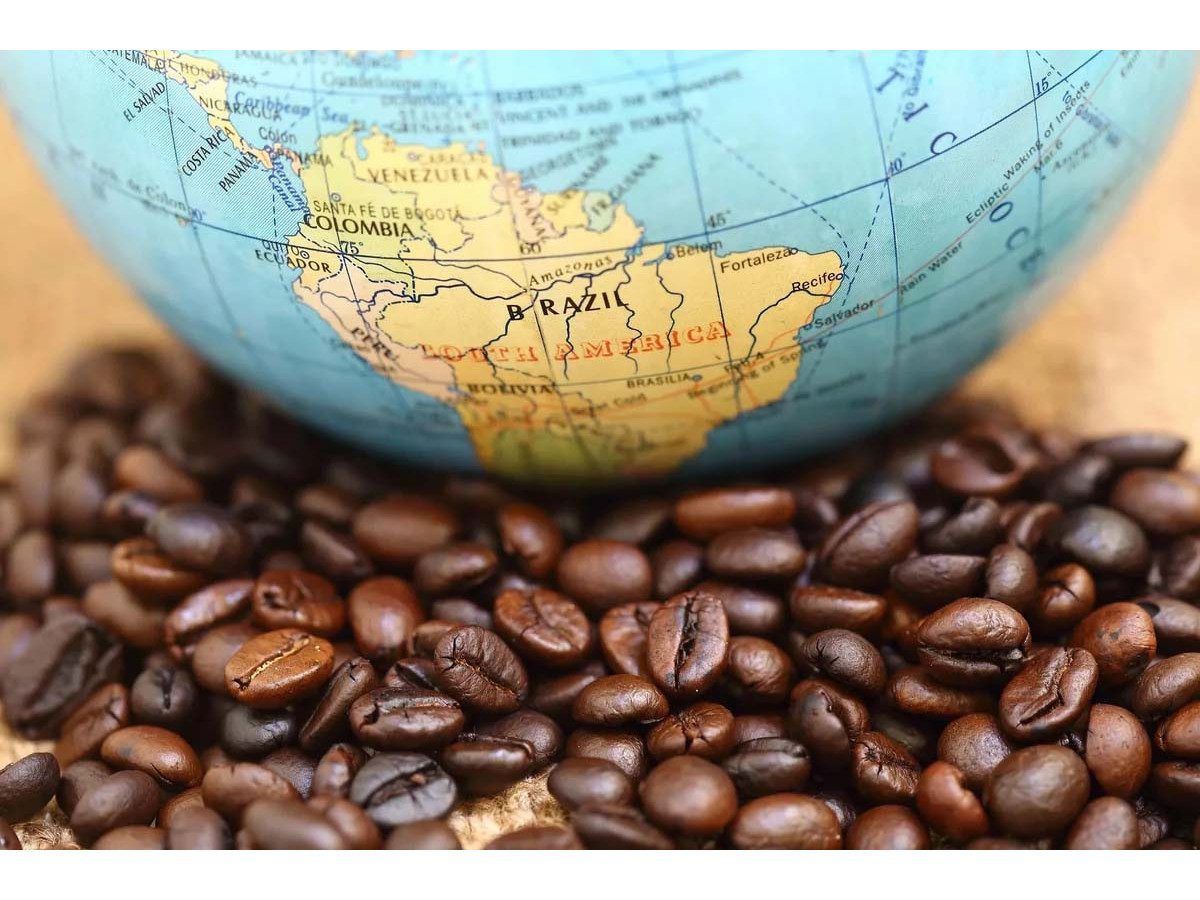
Brazil is a hot country in South America, which is famous not only for its picturesque nature and white beaches, but also for coffee. More than 1/3 of coffee raw materials are produced in this country. Therefore, it occupies a leading position in this industry. How did it all begin?

The history of coffee from Brazil
It all started in the 18th century, when the country was under the control of Portugal. The first coffee bush was brought into the region called Para. Initially, growing coffee was not popular, so only a few farms were involved in this. Selling crops in Brazil began only in the 19th century.
By the middle of the century, there was so much coffee in the country that supply exceeded demand. Then it was decided to export it. Almost from the very beginning, 30% of world demand was covered only by Brazilian coffee. And this figure grew steadily. In the 20th century, it was already 80%. At some point, it was only possible to buy coffee of Brazilian origin.
This became a problem for the Brazilian economy because the cost of their product fell. The government even ordered the burning of several tons of coffee. But that didn't help. Only by the end of 1975 the share dropped to 33%.
Country coffee production statistics
There are several main indicators here:
- The amount of raw materials per year. This figure is about 2.5 million tons.
- The total area of plantations. It is equal to 27,000 square kilometers.
- Annual turnover. The maximum amount of exported coffee is 1.8 million tons. Translated into US dollars, this amounted to 5.1 billion.
This became possible due to several natural and climatic factors. First, the plantations are located 700 meters above sea level. This promotes faster coffee growth. Secondly, the cultivation takes place in a plateau. Thanks to this, all berries ripen at about the same time. Collecting coffee from Brazil is done using special combines. Third, coffee trees are planted in the open sun. This speeds up the maturation process.
Despite all the advantages of such a system, it also has disadvantages. For example, because of the scorching sun, the soil of plantations is quickly depleted. Therefore, farmers have to devote a lot of time to fertilizing it. Otherwise, the quality of the manufactured product will fall.
What types of coffee are grown in Brazil?
Such type of coffee as mono-arabic Brazil grows all year round. It makes up 80% of all coffee raw materials. The remaining 20% are Robusta. Mixtures of these species form different varieties. The most popular are the following:
- Santos. It is considered the quality standard for Brazilian coffee. This variety got its name due to the port from where it is exported. The peculiarity of this coffee is that it has a sour taste and a chocolate aftertaste.
- Bourbon. It is the progenitor of all known varieties. It ranks second in popularity in the world. The flavors of bourbon combine caramel sweetness, fruity notes and a velvety texture.
- Mundo-Novo. This variety is obtained by crossing bourbon with another variety - Sumatra. As a result, such coffee acquires a simpler taste. Despite this, Mundo-Novo is more resistant to various diseases.
- Canilon. This variety is a subspecies of robusta. This is why it is stronger than other coffees. It tastes like nutmeg and dried fruit in a bitter base.
- Catuai. It is grown in almost all regions of Brazil. This type of coffee has a pleasant sweetish taste. However, it is balanced.
- Minas. It differs in that it has a vanilla flavor with floral notes. You cannot buy this kind of coffee in every store.
In addition, many other varieties are grown in Brazil. For example, Rio, Akaya, Katigua and Obata. Since the leading country in which mono-arabic is produced is Brazil, they are all a blend of this type.
How is Brazilian coffee processed?
There are two main ways: natural and semi-washed. The first is most often used, since it ideally suits the climatic conditions of the country. The natural method assumes no rain, so it is carried out during the dry season.
The second method involves the use of a special mechanism that frees the grains from pulp and gluten. This significantly shortens the drying time.
Every year in Brazil there are new varieties of coffee. Changes are also made to the processing mechanisms. It is these factors that affect the quality of the crop. Some farmers are very meticulous about the cultivation of coffee. They collect and process it by hand. This allows you to obtain a drink with a sweet taste, purity and a pleasant sour aftertaste. Unfortunately, there are not many such farmers in Brazil.
If you want to buy high-quality coffee from Brazil, you should look into the Coffeeynya in Kiev. There is a large selection of different types of coffee.



















-400x300.jpg "Coffee Industry: Cuba")