COFFEE
 TEA
TEA CAPPUCCINO AND HOT CHOCOLATE
 SWEETS
 SYRUPS
 TABLEWARE
 RELATED PRODUCTS
 GIFTS AND SOUVENIRS
230 thousand tons - this is the average exported coffee from Mexico in recent years. In terms of the production of this product and deliveries abroad, Mexico is confidently among the top ten world coffee leaders, ranking eighth in its best years. The main importer is the USA.
The path to recognition
The coffee trees introduced by the Spanish colonialists in the 18th century were not considered for a long time in Mexico as a source of significant income. The harvest did not go outside the country. Commercial interest emerged in the second half of the 19th century among German and Italian immigrants familiar with the coffee industry in Guatemala and other Central American countries. Wealthy Europeans have acquired plots of land in the Guatemalan border, investing heavily in nurseries and coffee plantations.
The interest of small farmers in growing coffee for sale arose even later - in the middle of the 20th century. This happened, firstly, due to social and economic reforms, and secondly, due to a significant increase in the price of this product. The national coffee institute - INMECAFE made a huge contribution to the development of the coffee industry.
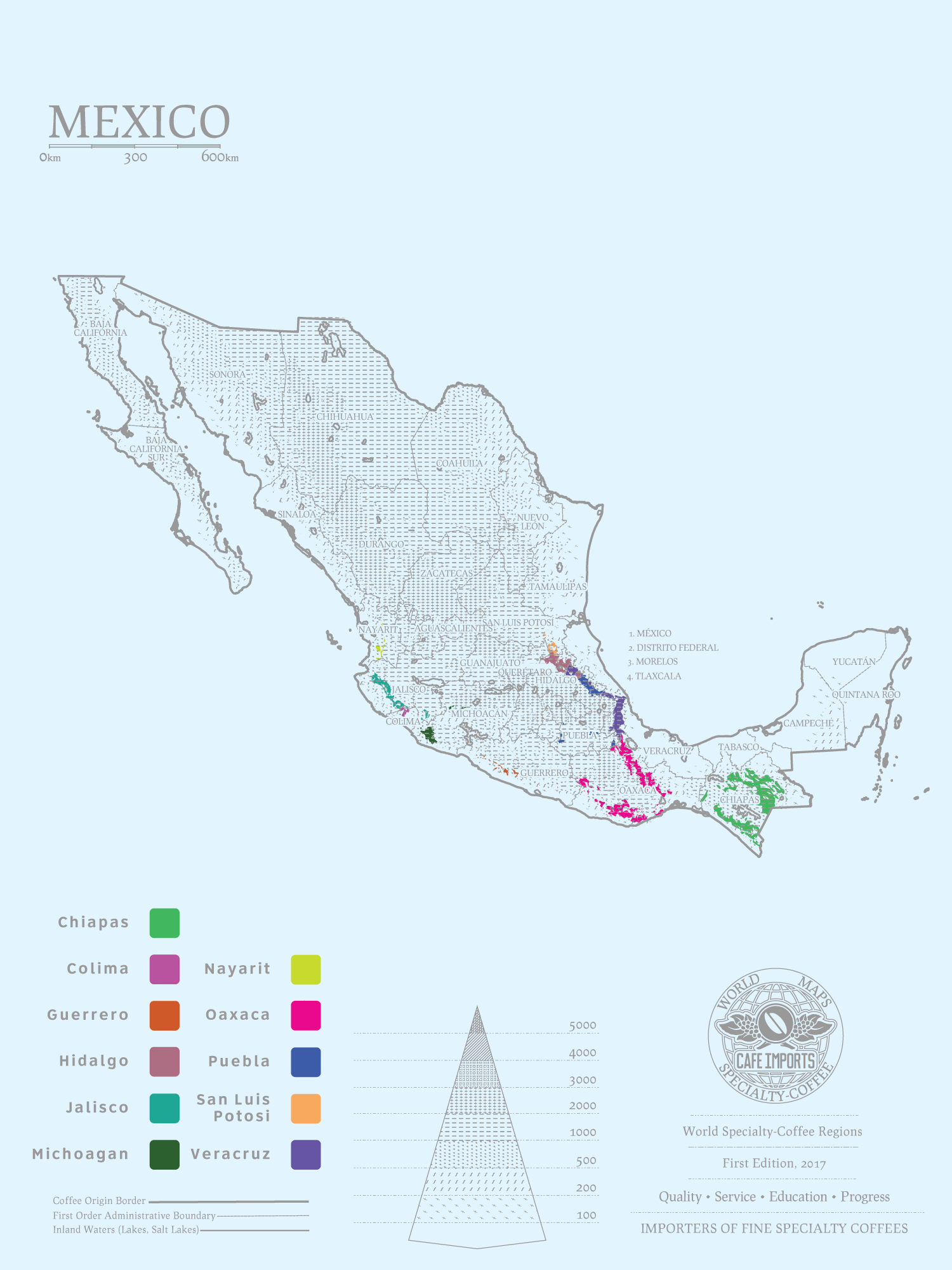
In the southern regions of the country, mainly Arabica is grown. It grows on mountain slopes: there is a high-altitude plantation at an altitude of 900 to 1700 m, and a "low-lying" one - from 400 to 900 m. The state of Veracruz is historically the first in the cultivation of coffee. In the best years of the 20th century, he, together with the states of Oaxaca and Chiapas, gave almost 75% of the total crop.
The coffee of the state of Chiapas, bordering Guatemala, has gained world fame. The climate and fertile soils, similar in their characteristics to the Guatemalan ones, give a very good result. The total volume of grain received and the export figures of Mexico and Guatemala are close to each other. So, in 2019, 3.7 million bags of coffee (60 kg each) were exported from Mexico, and 3.4 million from Guatemala.
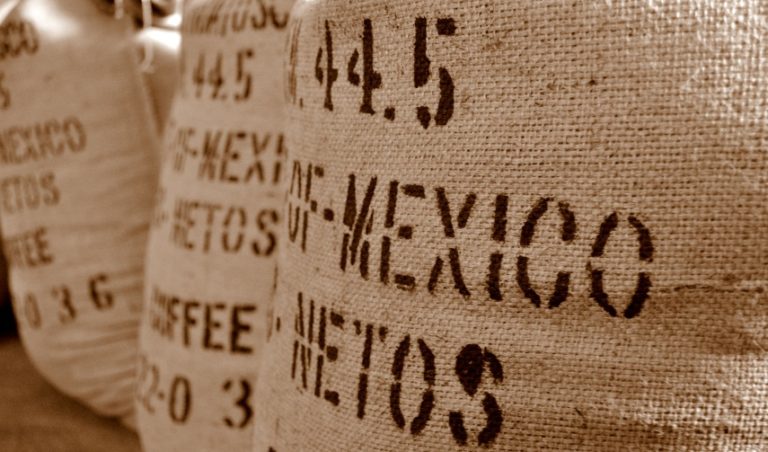
It is no coincidence that the taste of Mexican coffee is compared to Guatemalan varieties. Connoisseurs note the pleasant sourness, chocolate, citrus, nutty notes, the exquisite aroma of coffee from these countries. Professional tasters assign the highest scores to individual varieties grown on this land. In Mexico, as in Guatemala, a rare "Maragogip" is cultivated: Arabica with large grain and chocolate-nutty taste of the resulting drink. By the way, locals also prefer to buy coffee grown in their native country. The Mexican coffee recipe includes chocolate, cinnamon and nutmeg.
Coffee "fever"
How good income coffee brings, Mexicans estimated in the 70s of the 20th century. They began to treat him as the main export culture. In 1973, the INMECAFE Coffee Institute was founded to support small producers. Plantations have spread to many states. The territory allotted for coffee has reached 500 thousand hectares. For almost two decades, planting coffee provided a stable income and job for two million residents of the country, brought currency to the state treasury and allowed agricultural technology to develop actively.
Overproduction is a severe crisis that hit the Mexican coffee industry in 1989. There were several reasons for the industry's decline. One of them is the fall in world prices.
Prior to 1985, coffee export earnings were over $ 800 million, a figure that fell to $ 370 million in six years. Serious social upheavals followed: a surge in urban relocation and immigration to the United States. In 1989, the Coffee Institute stopped working.
In the early 90s, many farmers simply could not sell their crops. The lives of small producers became dependent on unscrupulous agents. While farmers lacked information, transport and credit, coyotes brokers were aiming to buy coffee beans at the lowest prices. To counteract such buyers, cooperatives began to be created, which allowed the coffee farmers to survive.
Until 2005, coffee exports only declined. But the problem was not only in the volume of supplied grain, but also in the decline in quality. Planting maintenance became insufficient: trees, at best, were freed from weeds, pest and disease control was almost not carried out.
Decent solution
Smallholders have not only survived, but have achieved very good results over the past decade. The states of Veracruz, Oaxaca and Chiapas are still the "base" of Mexican coffee. The business remains in the hands of producers with small plots, although the total area of land under coffee plantations is more than 400 thousand hectares.
The wet processing of fruits used by the Mexicans has long established itself as the best way to clean the grains. Nowadays, producers have information about the special value of organic coffee grown without chemical fertilizers. And although some simply cannot buy artificial additives, many deliberately refuse "chemistry" for the sake of a certificate confirming the quality of their products. Farmers know that importers want to buy green beans at a fair price.
Very genderIt is useful to learn to distinguish the taste characteristics of a drink brewed from Arabica and Robusta from different countries. The catalog coffeeynya.ua contains world brands of suppliers of coffee grown in Central America, Asia, Africa. You can not only buy coffee and brew it according to your favorite recipe, but also take a little “coffee” trip: make a cup in the way that is common in a particular exotic locality.









-400x300.jpg "Coffee Industry: Cuba")