COFFEE
 TEA
TEA CAPPUCCINO AND HOT CHOCOLATE
 SWEETS
 SYRUPS
 TABLEWARE
 RELATED PRODUCTS
 GIFTS AND SOUVENIRS
In Sudan, Coffea arabica coffee trees grow on their own - like a common shrub in the wild. And their cultivation gives local residents a chance to sell high-quality grains abroad (for example, they are bought by Nespresso). For poor Africans, coffee is an opportunity to survive: to buy medicine, pay for the education of children ... Collected bright red coffee fruits help out many people in a country suffering from hunger, disease, and armed conflicts. Coffee brings benefit and hope to the people of South Sudan. Local farmers think so.
Difficult fate

While Ethiopia proudly bears the name of the country that laid the foundation for coffee agriculture, Sudan is rarely mentioned in this context. However, the Boma plateau (in southeastern Sudan) is also the cradle of Arabica: the place where coffee trees originally grew.
For example, Arabica "Rume Sudan". It is a wild-growing variety. It bears fruit perfectly at an altitude of 1500-1800 m. It was noticed in the early 40s of the 20th century. This variety is resistant to fungal infections, does not need excessive maintenance: which is extremely important for the coffee industry. Pests and diseases of trees are a scourge that deprived the largest coffee producers of crops. For specialists, this species is very interesting: scientists create a hybrid that gives a greater yield while maintaining the quality of the fruit. Tasters note the excellent taste of the drink, even from wild fruits.
By the way, Sudan has its own interesting culture of making coffee. The drink is prepared carefully, great attention is paid to the aroma. Travelers testify that Sudanese coffee is strong and tasty, served in small cups in the national style.
But in the 21st century, South Sudan does not even meet domestic needs for food. This also applies to coffee.
Trade in a fragile world
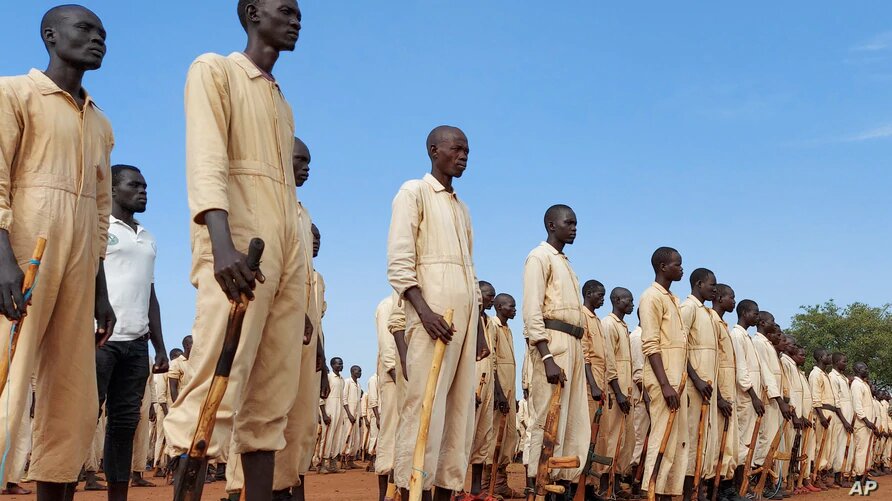
Severe political, socio-economic problems hinder the development of the coffee industry in South Sudan. However, Nespresso is interested in buying coffee from this country and investing in the development of the sector. The product grown on Sudanese soil has its own unique taste. Exporting coffee beans is a mutually beneficial trade. Entering the international market for Sudanese is a real economic victory.
Since farmers do not have their own equipment for processing coffee fruits, they are pleased with the opportunity to take their crops to a station for washing and drying the beans. Replacing the mortar and grinding stone with a special wet-cleaning technique is a blessing for local farmers. The price per kilogram of coffee beans is not high, and the harvested crop cannot fully satisfy even the fastest living needs. Expansion hopes are inspiring local coffee cooperatives.
The first export of a coffee crop from South Sudan thanks to Nespresso took place in 2015. The foreign company financing the project provides technical assistance to farms, provides access to equipment and training. It is important to raise the quality of the obtained grains: the world market puts forward its own requirements.
It’s a paradox, but a country facing the problem of hunger in the 21st century has agricultural land. They are fertile and can provide food not only for the local population, but also produce goods for export, including coffee beans. The neglect of the development of agriculture is incredible: there is no equipment, no rental, no investment, no state interest in agricultural problems. South Sudan imports food from other powers.
The country's agrarian potential is large, but in an unstable political situation, investments in agriculture are not received. The Nespresso project is more of an exception. Experts note that the fruits of coffee harvested thanks to external support on agricultural plots have not been in demand on the market before. In the last decade, the number of coffee farmers has increased slightly. However, this industry employs only a few thousand people.
World of coffee
The geography of coffee is diverse and interesting. The coffee industry reflects the economic, social and social successes and challenges of the planet. The regions in which arabica was originally grown in the wild may lag far behind countries that began cultivating it in the 18th or 19th centuries today. But interest in the drink is growing everywhere. People are already interested in more than just a cup of invigorating coffee. Coffee lovers, before buying coffee, tend to evaluate what is good about this or that Arabica, in which countries there is a very pleasant robusta, how much the blends of different varieties improve the taste.
Everyone can afford individual trips according to tastes and aromas. The store "coffeeynya" coffeeynya.ua presents well-known brands, established manufacturers. An unforgettable experience is provided by unique coffees from America, Asia and Africa. Grown in hot regions, on fertile volcanic soils, coffee beans will share their energy, the real magic of the earth.





















-400x300.jpg "Coffee Industry: Cuba")