COFFEE
 TEA
TEA CAPPUCCINO AND HOT CHOCOLATE
 SWEETS
 SYRUPS
 TABLEWARE
 RELATED PRODUCTS
 GIFTS AND SOUVENIRS
For an agrarian African country like Kenya, coffee is an extremely important product. In 2019, its deliveries abroad brought the country $ 200 million. The coffee industry accounts for 3.5% of all Kenyan exports.
Historical justice
Kenya is confidently among the top five African countries - coffee producers. History has made a kind of zigzag: neighboring Ethiopia is considered the birthplace of this culture, but in Kenya it began to be cultivated by the end of the 19th century.
Currently, there is a Coffee Department under the Ministry of Agriculture with an office in Nairobi. This organization considers its mission to promote Kenyan products. Marketing campaigns began in 1934, when quality assessment and sorting methods were developed.

120 thousand hectares are mostly small farms, only a third are large plantations. They are located in 33 districts of the country. There are 800,000 people working directly on the land, and about 6,000,000 people are employed in this industry. A million bags a year is not the limit for the country, but the climate and socio-economic problems are making themselves felt. Year after year is not necessary. It is good when you manage to use all the natural advantages - rich volcanic soil, good drainage, sufficient natural irrigation. In 2019, about 850 thousand bags (approximately 50 thousand tons) of coffee beans were harvested. 99 percent is Arabica.

Grain classification
The basic characteristic for coffee from Kenya is the grain size. This property, which became the basis for ranking products, is considered quite simple, saying nothing about the variety and quality. But not everything is so simple.
From A to B and beyond
The best grade is AA. These are the largest, highest quality grains sifted through 20 mm cells. This is the standard for large sizes. But there are also non-standard ones! They are even larger, no wonder they are called Elephants and labeled E.

And then there is PB - peaberry. This is actually a miracle: one grain instead of two is formed inside the fruit. One tenth of Kenyan coffee belongs to this extravagant "cherry".
B - grains that reach a sufficiently large size, they are often combined with the first category, getting the AB variant. There are grains of size C, and also T - the smallest and finest. TT - sorted parts of large grains. Prices go down from A to C, but on TT they are higher than on T. Pibbury is expensive, but still AA and AB standards are more expensive.
Tasting
The grain size affects the homogeneity of the roast and therefore the final quality. Therefore, their classification by size is so important. But the final result is assessed in a special way: on a scale from 1 to 10. Everything matters: the quality of the raw, roasted coffee and the impression of the resulting drink. A cup of coffee is rated by tasters on a scale:
- excellent;
- very good (standard);
- just good;
- below standard.
As a rule, the opinion of experts coincides with the point of view of a permanent consumer. Each person can get an idea of the variety for himself: it is enough to buy coffee produced in this country and brew it in the right way.
A little about Mbuni
One tenth of the harvest is mbuni. This variety costs much less. The drink from it is obtained with sourness. Unwashed raw materials are classified into MH - heavy "Mbuni" and ML - light.
Standard processing
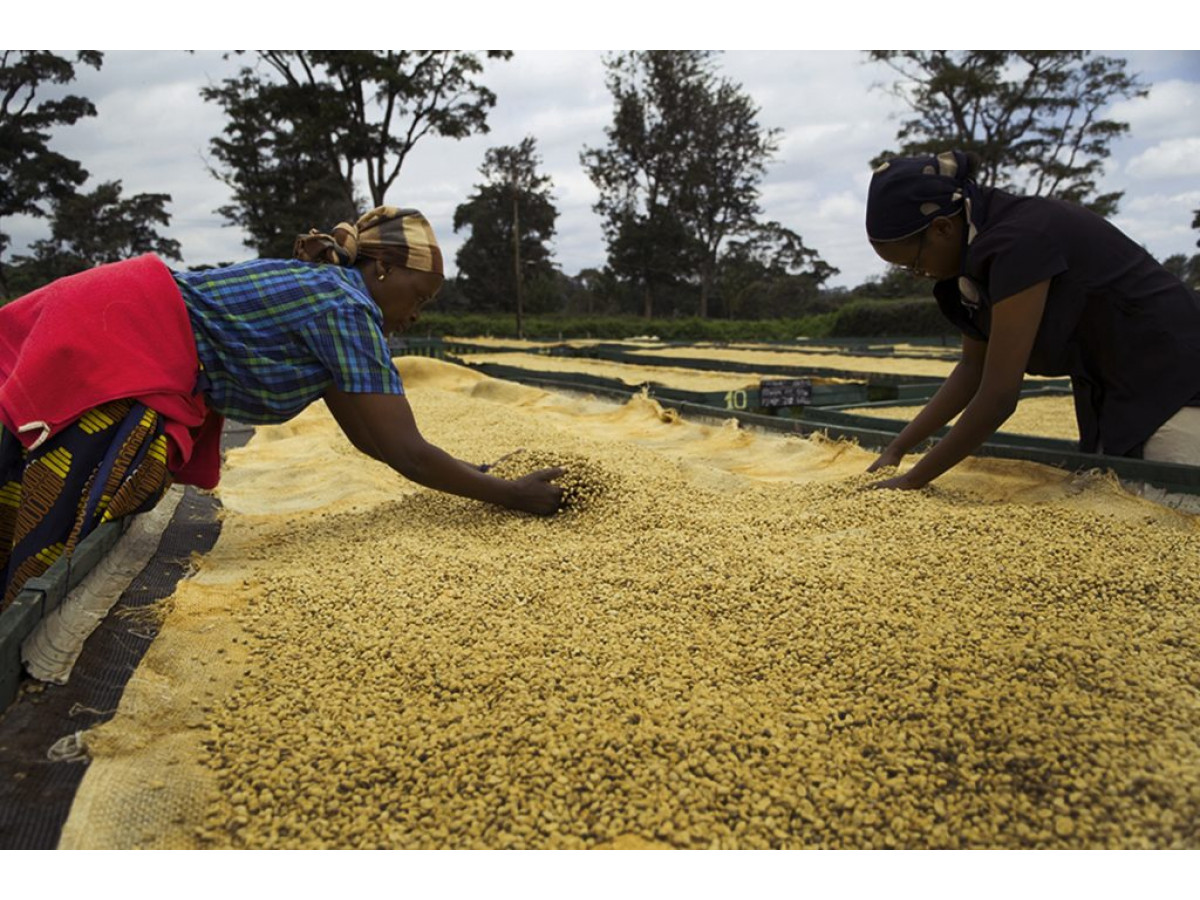
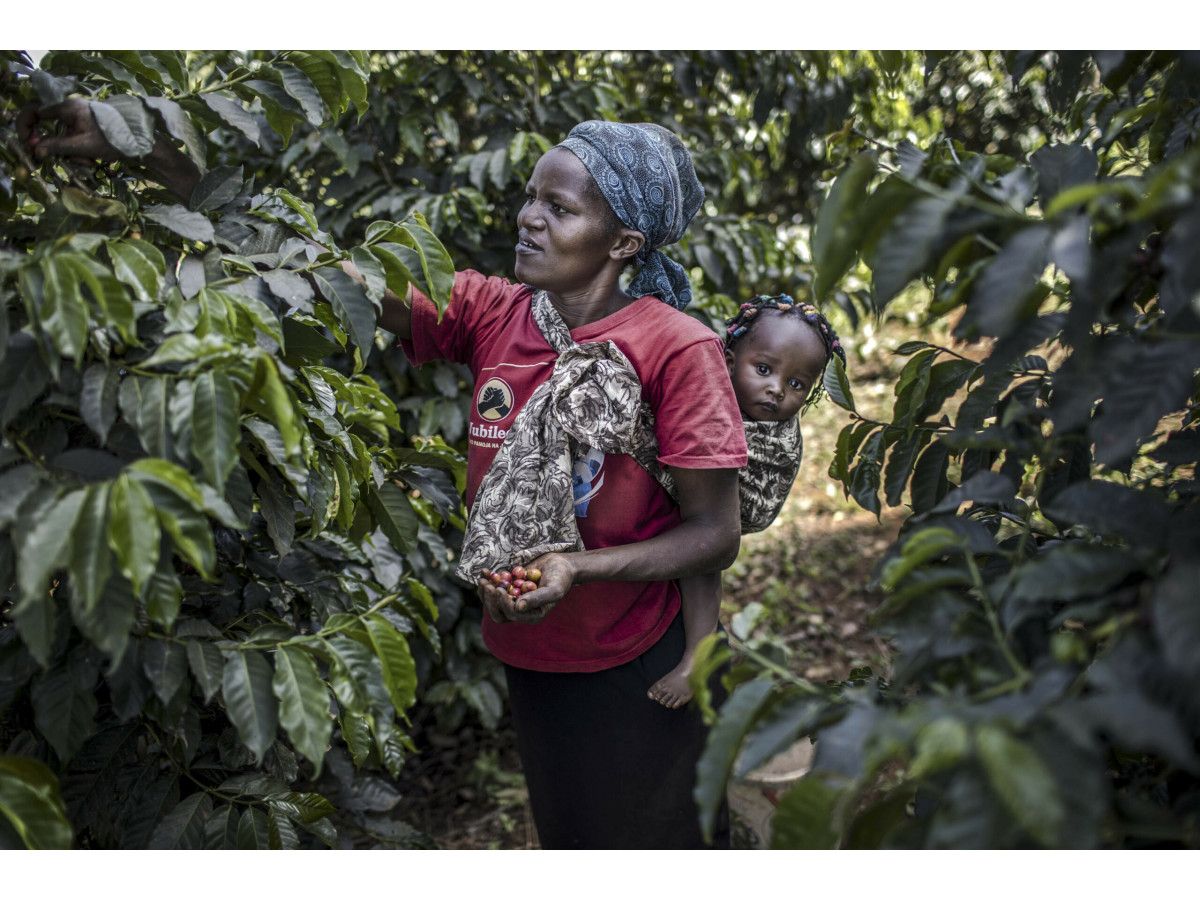
Yet almost all Kenyan coffee is wet processed - such is the struggle for quality. Only ripe fruits are harvested by hand, and then sorted, removing overripe, unripe and defective ones. After removing the pulp, the shell surrounding the grain remains, it is fermented for 36 hours. Then the raw material goes to drying tables and dries directly under the sun. It is regularly turned over to obtain the special flavor that distinguishes Kenyan coffee beans.
Farmers are engaged in processing twice a year. The plant blooms in two seasons. The first time after the start of rains in March - April, the second - in October. The early harvest is harvested in May and July. The bulk of the crop ripens in most areas in December.
How quality is guaranteed
Kenyans advertise their Arabica as one of the best in the world. To promote products, a clear regulation has been created at all technological stages. The coffee department links three important points into one whole:
- customer satisfaction;
- branding and sorting;
- production growth.
Achieving brand identity for Kenyan coffee is a challenge for marketing to the global market. The logo for it was developed relatively recently: the sun over Mount Kenya, generously scattered coffee beans and the motto - “SO RICH. SO KENYAN ".

Coffee law
The law regulating the production of this product was passed in 2001. It requires mandatory analysis of a sample from each batch. This is how quality is determined before marketing decisions are made. The Coffee Department provides licensing for all producers and agents. Licenses and registrations apply to roasters and packers, warehouses and auctions, nurseries and mills. Standard is standard.
And biddingstudy, and explore
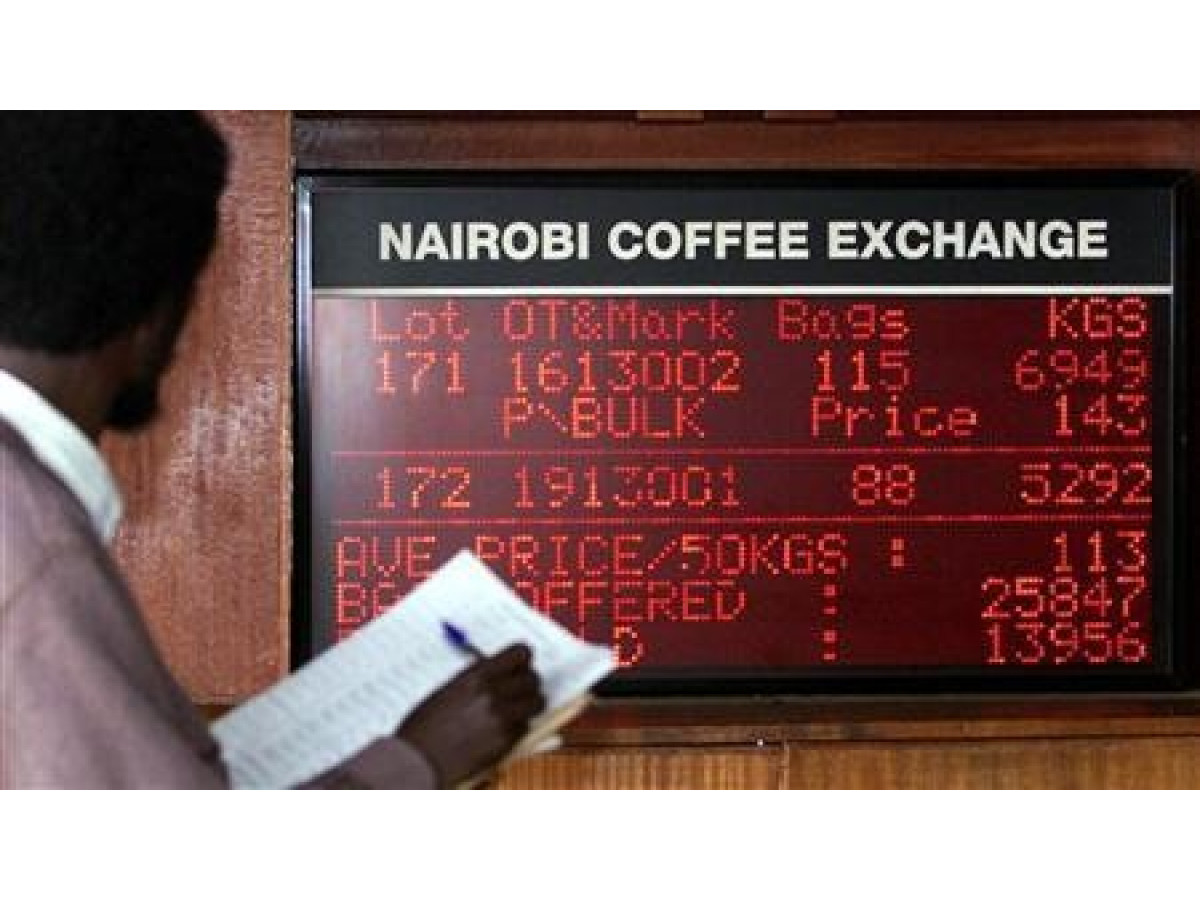
The Kenyan Coffee Producers Association controls the Nairobi stock exchange. Licensed traders buy coffee from Kenya every Tuesday throughout the year. Before buying coffee, they study the catalog and samples of products presented in it. There is a so-called “second window” system: direct sales from farmers through a marketing agent. Government agencies analyze contracts according to the main components: product quality and cost. The country has a Coffee College and a Coffee Research Foundation.












-400x300.jpg "Coffee Industry: Cuba")