COFFEE
 TEA
TEA CAPPUCCINO AND HOT CHOCOLATE
 SWEETS
 SYRUPS
 TABLEWARE
 RELATED PRODUCTS
 GIFTS AND SOUVENIRS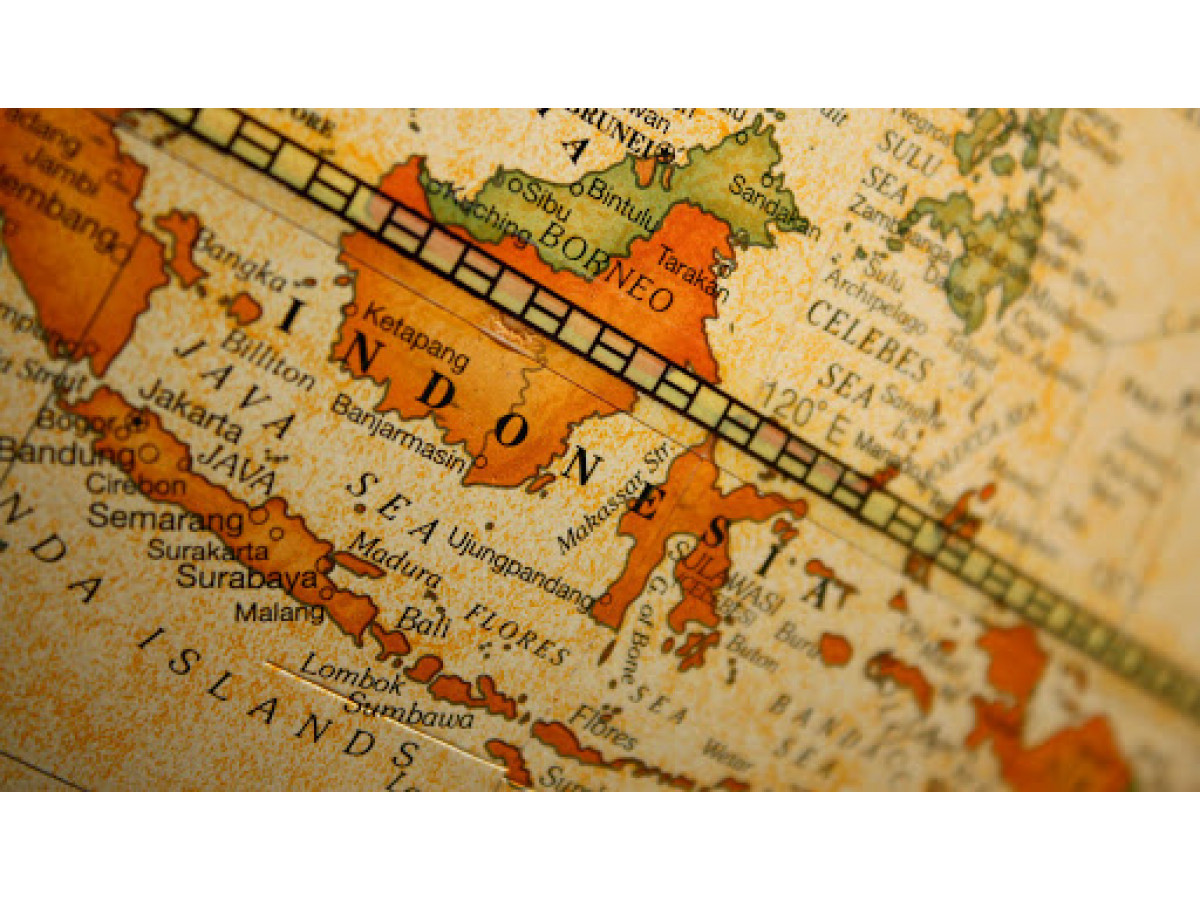
Indonesia is a country where one third of the population is engaged in agriculture. In total, 270 million people live in the republic (the fourth largest in the world). In the production of many agricultural crops, this Asian state occupies a leading position due to its wonderful climatic conditions.
So the coffee industry in Indonesia is ranked third in the world rankings of leading exporters in terms of its indicators. Of the 700 thousand tons of coffee produced annually, about a quarter remains for domestic consumption. Grain is delivered to the USA, European and Asian countries.
It all started with the Dutch
The coffee industry in Indonesia began with the Dutch during the colonial era in the 17th century. The country's climate, mountainous regions, fertile soils, the possibility of natural forest shading of coffee trees - the ideal conditions have attracted planters. The first territories chosen for cultivation for Arabica were near Jakarta, in Sukabumi and Bogor. Over time, plantations expanded: they appeared in Java, Sumatra, Sulawesi. Already at the beginning of the 18th century, coffee began to be imported by Amsterdam. Previously, only Ethiopia and Yemen supplied this product abroad, it was impossible to buy coffee from any other countries.
In most areas, economic activity led to deforestation and active development of infrastructure. In the 19th century, the harvest was transported by rail to the port of Semarang. Thus, remote areas were able to gain access to the export of their product around the world. Indonesia has proven to be competitive with other Arabica-producing countries.
But not everything was so rosy: in the 1870s, "coffee rust" appeared on plantations - a disease that affects trees without the possibility of recovery. Java was a little more fortunate - another subspecies was cultivated there. Many farmers have simply given up on coffee, preferring to grow tea. The attempt to replace the old varieties with Liberica brought temporary success to the Dutch: new coffee trees also suffered from diseases. Since Arabica and Liberica have not provided sustainable growth in the coffee industry, robusta, which is resistant to harmful fungi, has become the main botanical species for Indonesia.
Thus, today, the overwhelming proportion of Indonesian coffee is robusta. Resistant hybrid varieties (Arabica plus Robusta) and subspecies of coffee trees imported from India, Brazil and Ethiopia allow re-growing Arabica.
Three islands: taste and aroma
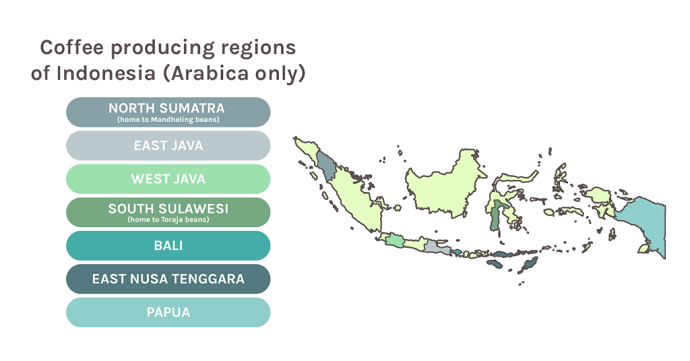
Small farms are the main grain producers, about 95% of all coffee in the country grows on small farms (each slightly more or less a hectare). The main coffee regions are Java, Sumatra, Sulawesi. These are islands covered with mountain ranges, the largest in Indonesia. Plantations are located at an altitude of 1800 m above sea level.
Java
The coffee grown in Java (one of the largest islands in the archipelago) is famous all over the world. It produces a significant amount of the country's coffee. The Arabica brand "Old Java" is unique, it is called "aged", meaning the methods of aging the grain produced on the island in bags - up to five years. Fans of the brand prefer to buy coffee beans that have changed their color from green to light brown over the years. As a result, they get a spicy, sweet and rich drink.
Sumatra
A high-quality drink is obtained from the grains harvested in Sumatra: varieties that have conquered the whole world - Mandeling, Ancola and Lintong. Fruity, "forest" tones, spices, earths, richness and low acidity are found in cups of local coffee. Wahana Estate Rasuna is a brand known as fruit flavored coffee, dense and low in acidity. A special kind of "wet" method makes the final product unique. The bluish color of unroasted grains is due to the lack of iron in the local land and the way the fruit is processed. The island is harvested twice a year. In Sumatra, up to 75% of the country's entire robusta is grown.
Sulawesi
A feature of Sulawesi is not too large yields per hectare due to the inconvenient mountain slopes for harvesting. But the high quality of coffee is guaranteed by traditional cultivation methods:
- manual cleaning;
- dry processing method;
- careful sorting;
- organic farming
A cup of drink made from Sulawisi beans is characterized as strong coffee, with a slightly pine aroma, fruity or nutty taste and buttery aftertaste. Sweetness and mild aftertaste are noted. Local Arabica is sold under the Kolosi brand - the name of the city through which coffee beans are supplied.
Other regions
It is worth mentioning that in addition to the three leading regions, Indonesian coffee is grown in Bali, Sumbawa, Flores and Papua. In general, these areas make a worthy contribution to the national product. Total export figures can vary significantly from year to year: the industry is affected by climatic and seismic complications. In general, coffee producers lack cooperation, government support, modern technological and logistics solutions. Although there are three professional associations of coffee exporters and Scientific- Research Institute of Coffee and Cocoa.
Standards and exotic
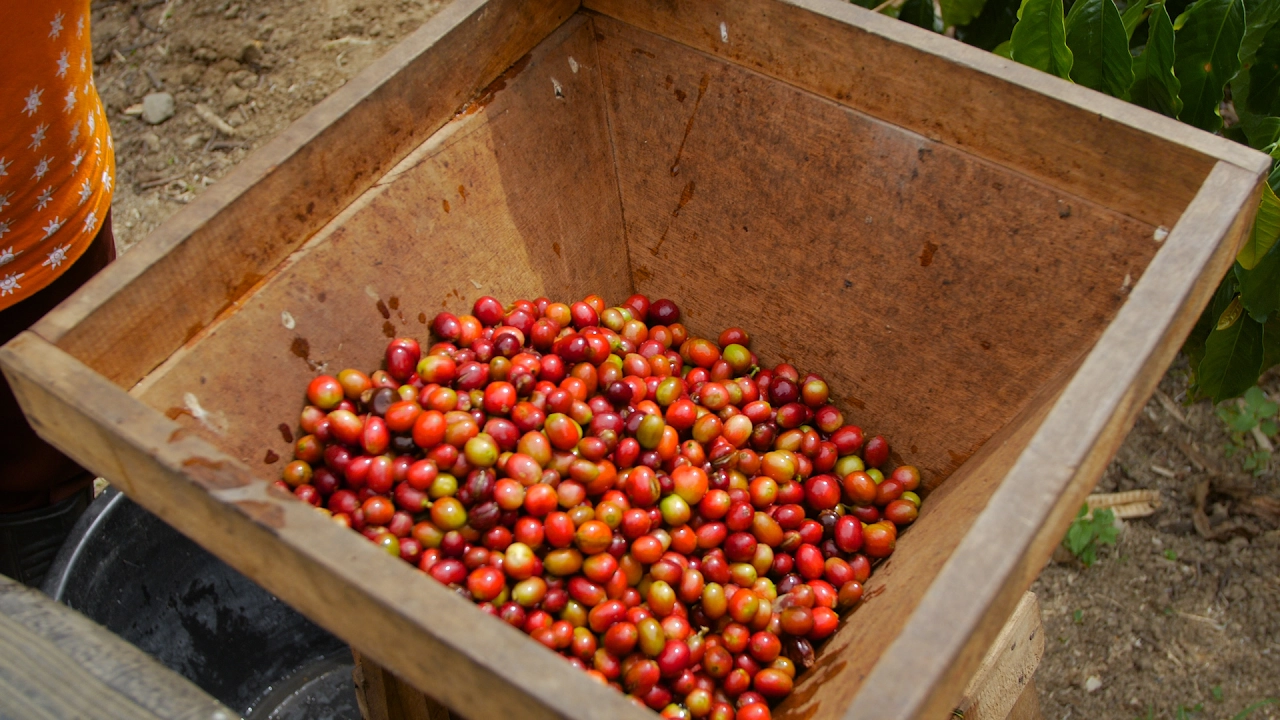
The usual method for processing fruits in Indonesia is drying in the sun and separating the grains without the use of water. In some regions, mechanical wet processing is used: the pulp is peeled off and then washed off. After that, the grain is dried and cleaned again. Variations of the "wet" method include different methods of manual and machine polishing and combinations of several stages of fermentation.
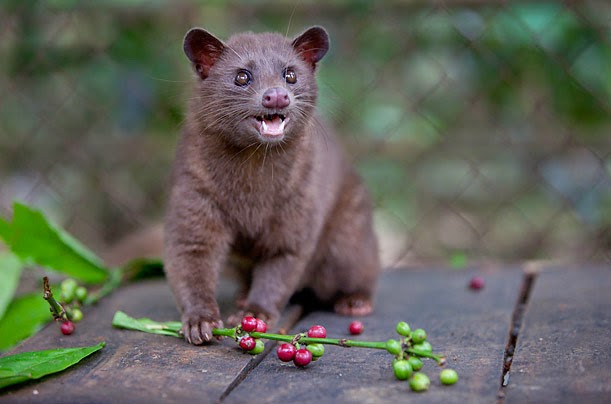
There is an exotic treatment for ripe fruits: they are eaten by small mammals of the species Paradoxurus hermaphroditus, and the undigested grains remaining in their excrement are washed and dried by farmers in the sun. The digestive tract of animals acts on the product in a specific way, removing substances that spoil the taste. The end result is a sweet, bland drink. Kopi Luwak is a very expensive variety. Paying $ 600-700 per kilogram, you can buy coffee beans processed in such an unusual way. Despite the strange, at first glance, method of processing, its production is put on stream in several Asian countries. The choice of the most ripe fruits is up to the animal, and this also works for quality. However, on fur farms this is not always possible.
It is noted that Indonesian coffee is often used to produce blended varieties with African and Central American varieties. Interestingly, lovers of authentic Indonesian coffee prefer to add condensed milk to the drink, rather than sugar and whole milk. Nowadays, it has become much easier to buy coffee from distant countries, regions and independently evaluate its taste and aroma. Buyers of coffeeynya.ua have such an excellent opportunity: there is a large selection of various brands of world famous manufacturers.










-400x300.jpg "Coffee Industry: Cuba")