COFFEE
 TEA
TEA CAPPUCCINO AND HOT CHOCOLATE
 SWEETS
 SYRUPS
 TABLEWARE
 RELATED PRODUCTS
 GIFTS AND SOUVENIRS
Although South America leads the way in the production of coffee beans, there are also the world's largest producers in Asia. India is in the seventh line of the overall ranking in terms of exports and the third among Asian countries (after Vietnam and Indonesia). Statistical calculations show that more than 800 million dollars received by the country in this sector of the economy is not the limit. Export revenue is expected to increase over the next five years. Many countries are still planning to buy coffee grown in India, including Italy, Spain, France, USA, Japan.
Smuggled from Yemen
The benefits of the coffee tree have been known to Hindus for at least five centuries, starting in the 17th century. In the area of Karnataka, in the Chandragiri hills, Saint Baba Budan planted the first seeds, secretly removed from Yemen. However, the Indians began to systematically plant coffee plantations only from the middle of the 19th century: in 1840 they appeared in areas close to Baba Budan Giri. The mountains of the southern region still have the highest harvest.
Arabica and robusta
India coffee - Arabica and Robusta. To obtain high-quality beans, two important conditions are met - coffee trees grow in mountainous areas and are protected from intense sunlight. Another significant plus for local plantations is monsoon rains.

Traditionally, the three southern regions boast the most significant harvest:
- Karnataka (60%);
- Kerala (30%);
- Tamil Nadu (5%)

Other Indian states that have joined in the cultivation of this product account for no more than five percent of the total harvest.
Arabica and robusta differ in requirements for climatic conditions in several parameters. Local Arabica grows at an altitude of 1000-1500 m above sea level on gentle slopes, robusta grows at an altitude of 500-1000 m on smoother slopes.
After flowering, Arabica ripens for seven months, prefers a temperature regime of 23-28 degrees, air humidity 70-80%, dry period - up to 3 months. Robusta is harvested after 9 months, it needs half the precipitation, and the air humidity is 80-90%.
Common botanical varieties in India:
- Cauvery
- Selection 9
- Kent,
- S795.
S795 is the most popular Arabica in Southeast. Kent is an old species, cultivated since 1920 and named after an English planter. The varieties Cauvery and Selection 9 are hybrids perfectly suited to local climatic conditions.
Farm labor

Small producers work in this branch of agriculture, there are only a quarter of a million of them. The fruits of Indian farmers are collected by hand everywhere. In addition to diseases of coffee trees, one of the serious problems is poisonous cobras, which are often found on plantations.
Two traditional methods of cleaning grains - dry and wet - are used by Indian producers. Coffee berries are dried in the sun. When wet processing, defective seeds are removed immediately.

Farmers rely on the natural fertility of the soil, carry out all weeding operations by hand, fertilize with organic matter. Indian coffee beans are highly prized in the USA, Japan and European countries, as they are produced without chemicals to protect plants and stimulate their growth.
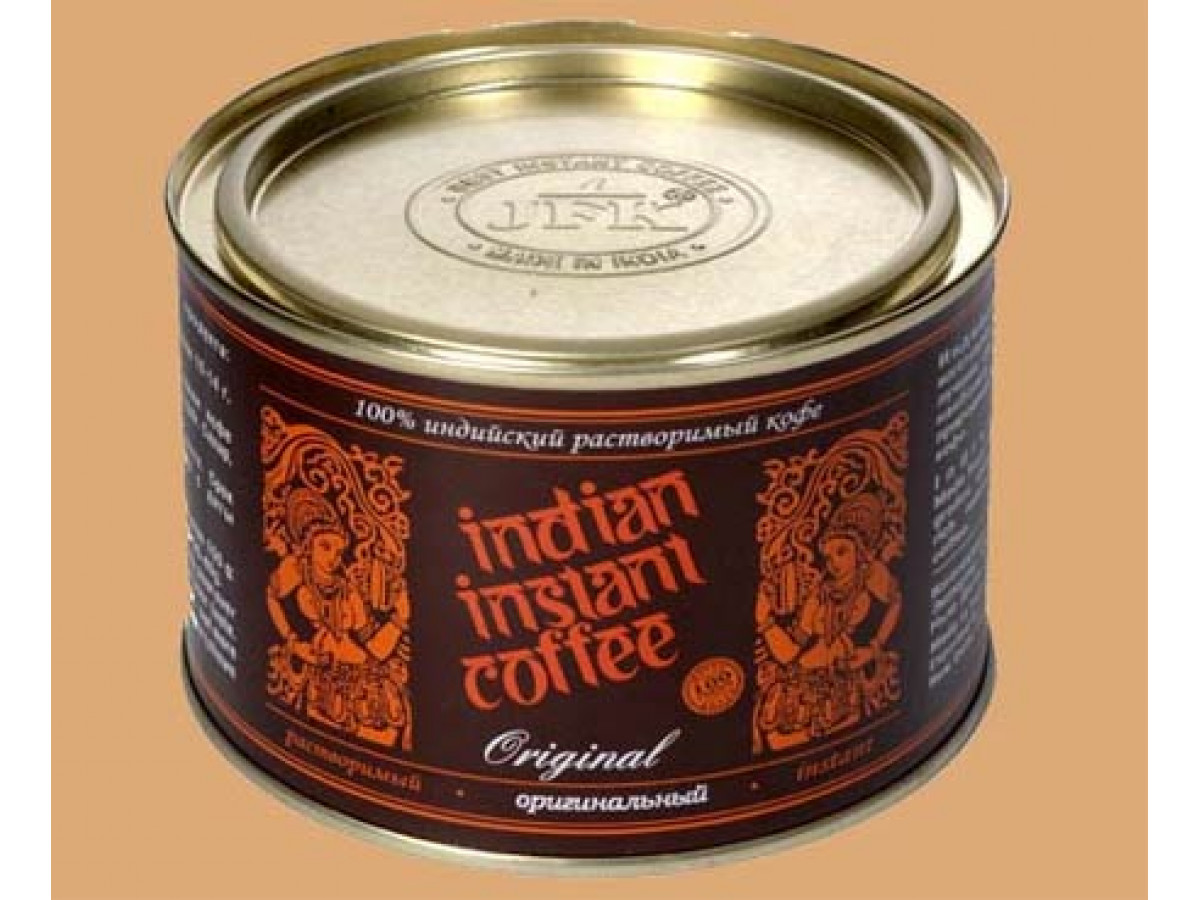
India produces raw materials for various types of beverage - standard natural, decaffeinated, instant and flavored. Indian coffee is considered quite sweet and is used to make espresso: for example, Anamalais; Bababudangiris; Manjarabad.
There are several well-established brands in India, experts advise buying coffee with the logo:
- Pulneys;
- Sheveroys;
- Monsooned Malabar;
- Mysore Nuggets;
- Robusta kaapi royale
Since the beginning of the 40s of the 20th century, the state has taken a number of serious steps to protect farmers in the field of legislation and export regulation. In recent decades, there has been a significant increase in the production of coffee beans in the country. This is largely due to the economic reform of the industry: domestic and foreign sales quotas for local producers have increased.
How to overcome disease
A number of reasons contributed to the decline in the quality of Indian coffee in the 20th century. Diseases in Arabica trees have led to the cultivation of robusta and coffee rust resistant hybrids. In Karnataka, 70% of Arabica is hybrid trees.
On a positive note, it is noted that due to plant disease, not all farmers have given up growing coffee in favor of tea. Indeed, besides rust, coffee trees are also susceptible to fungal diseases. Farmers do not know how to deal effectively with them.
The Government of India promotes agricultural development: the Coffee Council and the Indian Coffee Research Institute, known throughout Southeast Asia, were established. The country has accredited certification agencies for the coffee beans produced, technical regulations have been developed for the correct assessment of products.
The first research projects began back in 1915: they were associated with the infection of trees. Regular study and work on improving agriculture and product quality went through several stages, the most important of which was the creation of the Coffee Council... This organization focuses on the internal and external promotion of a local product.
The Institute of Coffee has experimental grounds (over 130 hectares). Nurseries exist for working with Arabica and Robusta, breeding new varieties. For breeding, material obtained from different countries (including Ethiopia) is studied. Employees are employed in dozens of the most important areas, including:
- biotechnology;
- soil science;
- agronomy;
- processing technology
The institute not only collects information, but also trains specialists for the Indian coffee industry, as well as citizens of other countries that grow this culture.
Coffee vs tea
India is a tea country, but the average consumption of coffee drinks per capita is constantly growing. Coffee consumption is more common in the southern part of the country, and coffee culture is more developed in cities than in rural areas. And yet, interest in it is constantly growing, new chain coffee shops appear, including foreign brands. Visitors, as a rule, do not think about what sort or blend of coffee they are going to buy in an Indian cafe, they mostly focus on the famous logo.
In India, it is customary to mix different grain sizes and varieties to create the optimal flavor. In the middle of the 20th century, a sweet milk drink became popular in the country, consisting of 70% natural coffee (arabica, robusta) and 30% chicory. This type of coffee can be bought at local establishments. Networked Indian coffee houses emerged in the 1940s with the support of the Coffee Council. Various circumstances either facilitated or hindered the development of these enterprises, but gradually the network spread throughout the country. They are organized according to the principle of cooperative societies, governed by committees of employees.















-400x300.jpg "Coffee Industry: Cuba")